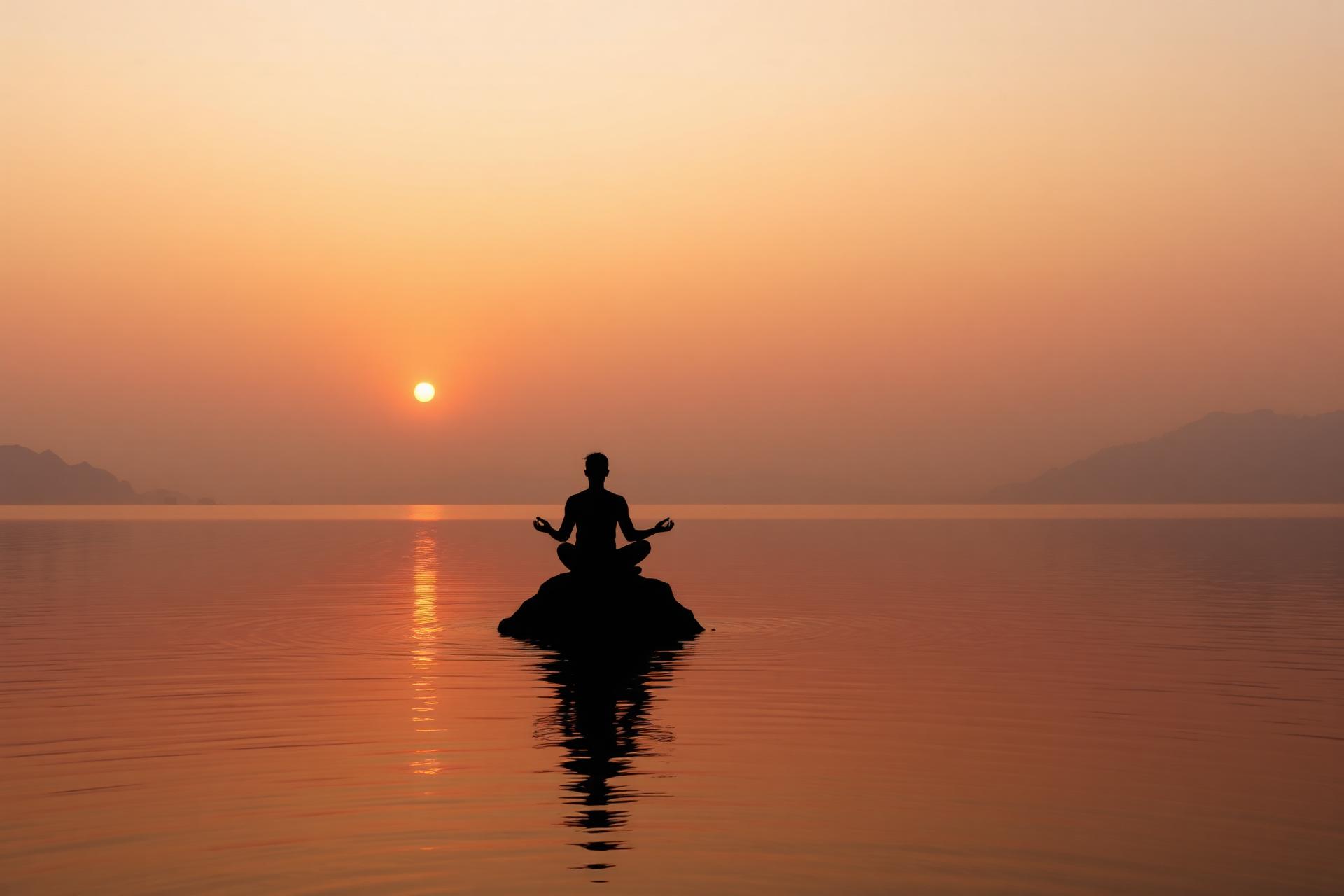
Breath Meditation
Breathing becomes the anchor for your attention. Some practices simply observe the breath naturally, while others involve specific breathing patterns designed to calm the nervous system or increase energy.
Best for
- Anxiety
- Stress
- Grounding yourself quickly
- Improving concentration
Joe Dispenza-Style Meditation
Popularized by Dr. Joe Dispenza, these guided meditations combine breathing techniques, visualization, emotional rehearsal, and concepts from neuroscience and personal transformation.
Rather than simply relaxing, participants are encouraged to mentally and emotionally rehearse the person they wish to become, cultivating elevated emotions such as gratitude, love, joy, and abundance while releasing familiar emotional patterns.
Many people use these meditations as part of a daily practice focused on personal transformation and creating lasting changes in thought patterns, emotional responses, and habits.
Best for
- Personal transformation
- Creating new habits
- Emotional healing
- Visualization and manifestation
- Daily self-development practice
Non-Sleep Deep Rest (NSDR) / Yoga Nidra
Non-Sleep Deep Rest (NSDR) and Yoga Nidra are practices designed to bring the body into a state of deep relaxation while the mind remains aware.
Typically practiced lying down, you are guided through techniques such as body awareness, breathing, and progressively relaxing different parts of the body. As the body settles, you may enter the deeply relaxed state between ordinary wakefulness and sleep.
Unlike traditional seated meditation, the emphasis isn't on maintaining focused attention or observing your thoughts. The practice is largely about allowing the body and mind to deeply rest without requiring you to actually fall asleep.
Best for
- Deep relaxation
- Stress relief
- Rest and recovery
- Preparing for sleep
- People who struggle with traditional seated meditation
Guided Meditation
Rather than sitting in silence, someone leads you through the meditation with spoken instructions. They may guide you through relaxing your body, imagining peaceful scenes, or exploring emotions.
This is often the easiest place for beginners to start.
Best for
- New meditators
- Relaxation
- Sleep
- Learning different techniques
Body Scan Meditation
Attention slowly moves through different parts of the body, noticing sensations without trying to change them.
Many people discover areas of tension they weren't even aware they were holding.
Best for
- Relaxation
- Better sleep
- Chronic stress
- Reconnecting with your body
Loving-Kindness (Metta) Meditation
This practice focuses on generating feelings of compassion toward yourself and others.
Rather than clearing your mind, you intentionally repeat phrases such as:
- May I be happy.
- May I be healthy.
- May I live with peace.
Best for
- Self-compassion
- Healing relationships
- Reducing anger
- Increasing empathy
Mindfulness Meditation
This is one of the most well-known forms of meditation. The goal is simply to observe the present moment without judgment.
You might focus on your breath, physical sensations, sounds around you, or simply notice your thoughts as they arise without becoming attached to them.
Best for
- Reducing stress
- Increasing awareness
- Improving focus
- Learning emotional regulation
Visualization Meditation
Visualization uses the imagination intentionally. You may picture healing light, achieving a goal, meeting your future self, or creating a peaceful environment in your mind.
Many athletes, performers, and high achievers use visualization to mentally rehearse success before it happens.
Best for
- Personal growth
- Confidence
- Manifestation
- Creativity
Mantra Meditation
A word, phrase, or sound is repeated silently or aloud throughout the meditation.
The repetition helps give the mind something steady to return to instead of following every passing thought.
Examples include traditional mantras like “Om” or personal affirmations.
Best for
- Busy minds
- Focus
- Inner calm
- Spiritual practice
Walking Meditation
Meditation doesn't always happen sitting on a cushion.
Walking meditation involves moving slowly and intentionally while paying close attention to each step, your breathing, and your surroundings.
Best for
- People who struggle to sit still
- Nature lovers
- Stress relief
- Mindfulness in daily life
Movement Meditation
Practices such as yoga, tai chi, qi gong, or even slow intentional stretching can become meditation when performed with mindful awareness.
The emphasis is less on exercise and more on connecting the mind and body.
Best for
- Active people
- Body awareness
- Balance
- Flexibility
Sound Meditation
Instead of silence, sound becomes the object of focus.
This may include singing bowls, chimes, nature sounds, chanting, binaural beats, or calming music.
Best for
- Relaxation
- Deep rest
- People who find silence uncomfortable
Transcendental Meditation®
This structured practice uses a personalized mantra taught through certified instructors. Sessions are typically practiced for 20 minutes twice each day.
Research has suggested benefits for stress reduction, though it is only one of many effective meditation approaches.
Best for
- Consistent daily practice
- Stress reduction
- Structured learning
Vipassana Meditation
Vipassana, often translated as “insight meditation,” is an ancient Buddhist meditation practice centered on closely observing your experience as it unfolds.
The practice typically begins by stabilizing attention and then observing physical sensations, thoughts, and emotions without reacting to or trying to change them. You begin to notice that sensations and thoughts continually arise, change, and pass away.
The deeper purpose of Vipassana isn't simply relaxation. It is to develop insight into the nature of your own mind and experience—particularly impermanence, attachment, and the ways our reactions can contribute to suffering.
Best for
- Developing self-awareness
- Understanding patterns of thought and reaction
- Becoming less reactive
- Developing insight
- Those interested in deeper Buddhist meditation practices
Heart-Coherence Meditation
Heart-coherence meditation combines slow, intentional breathing with focused attention on the area around your heart and the deliberate cultivation of emotions such as gratitude, appreciation, love, or compassion.
Rather than simply observing whatever emotion is already present, you intentionally practice creating a different emotional state. Bringing together the breath, attention, and emotion can help shift the body out of a stressed or reactive state and into one that feels calmer and more balanced.
This can be a particularly accessible practice for people who find it difficult to quiet their thoughts because the goal isn't to stop thinking. Instead, you're giving your mind something specific to focus on while practicing how to intentionally shift the way you feel.
Best for
- Stress and emotional regulation
- Cultivating gratitude and positive emotions
- Calming the body and mind
- Shifting out of a reactive emotional state
- Creating a greater sense of emotional balance